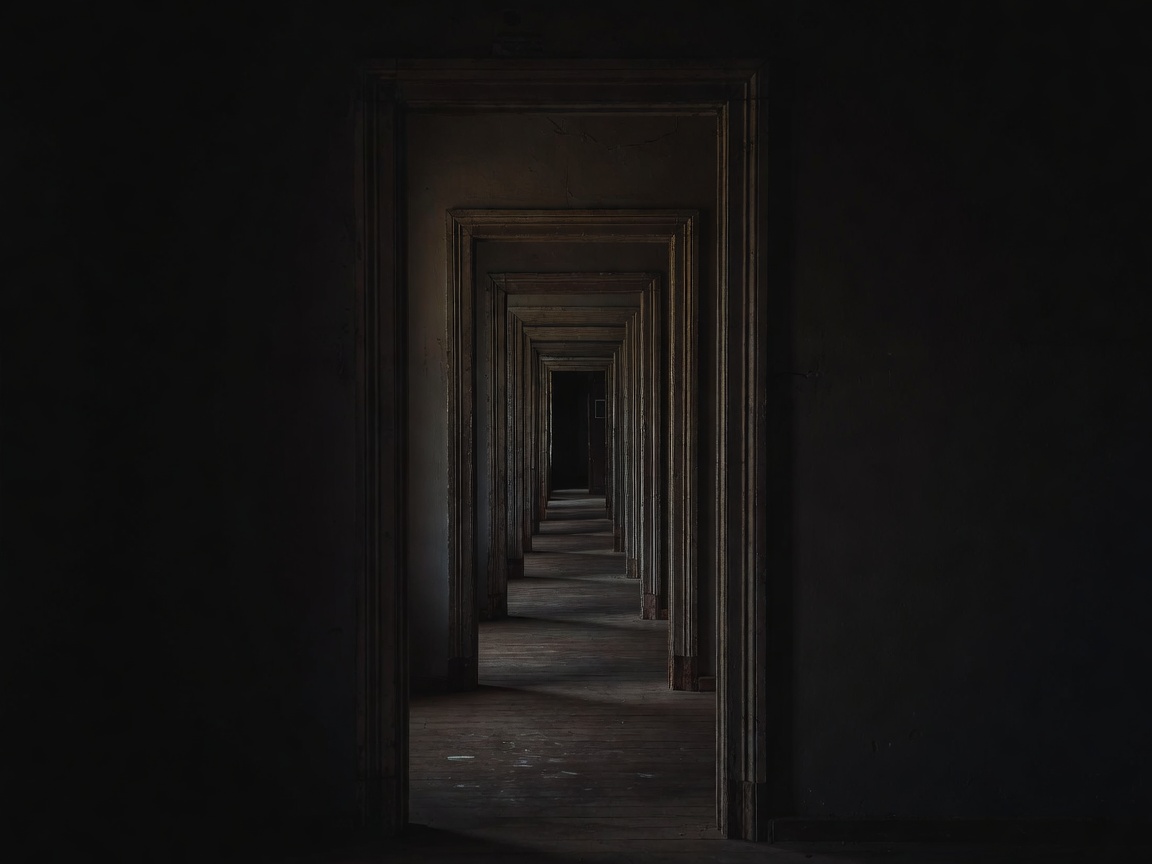
Ask what remains beyond the view
At the beginning of a shot, part of the scene is unavailable. A pan may bring it into view; a tracking move may disclose what an obstruction concealed. Start by describing that change in access. “The camera moves right until a second person becomes visible” gives an interpretation a firmer basis than “the camera becomes emotional.”
The timing of the disclosure matters. If we discover the second person before the main character does, the movement can create an imbalance of knowledge. If we discover them together, it may align our surprise. If the reveal comes after the character reacts, we spend a moment reading an expression without knowing its cause. Similar paths can therefore produce different effects.
Name the movement without stopping there
A pan rotates the camera horizontally from a position; a tilt rotates it vertically. A tracking or dolly move changes the camera’s position through space. A zoom changes focal length without itself moving the camera. These distinctions help describe the image, but terminology is only the beginning. Ask what the movement does to relationships inside the frame.
With a physical move, nearby and distant objects can shift relative to one another through parallax. A zoom from a stationary position changes magnification and framing without producing that same positional change. Either can tighten attention, but their spatial effects differ. Describe the visible result before guessing which piece of equipment produced it.
A push inward does not guarantee intimacy
A gradual approach can make a face easier to inspect. It might support tenderness, suspicion, concentration or dread. The emotional reading depends on the performance, sound and information surrounding the move. Ask whether the approach grants access to a person or makes their expression harder to escape.
Contrast a move that begins before a revelation with one that begins after it. The first may make us anticipate importance; the second may register the consequence of something already understood. In either case, note the starting distance, final distance and moment of initiation. “The camera pushes in” is less useful than an account of how the move changes our attention.
Following can align us—or expose a gap
A camera that follows a character does not necessarily share their point of view. It may trail behind, reveal something over their shoulder or remain unable to see what they see. In Jean-Pierre and Luc Dardenne’s Rosetta, the camera’s proximity to the central figure invites careful discussion of bodily effort and restricted access. Proximity alone does not mean we know every thought.
Compare this with the different kinds of spatial discovery in Alfonso Cuarón’s Children of Men, photographed by Emmanuel Lubezki. Extended moving passages can keep action and surrounding space connected, while directing attention through timing and blocking. A long take is not automatically more truthful than an edited sequence; it organizes our access by other means.
Height and angle need a comparison
A low camera angle is often described as making a figure powerful. Sometimes it does, but the same position can show vulnerability against an immense ceiling or emphasize a child’s experience of adults. A high angle might reveal a useful layout rather than diminish a person. Read the relationship among angle, scale and environment.
Akira Kurosawa’s High and Low is a useful prompt for examining how groups are arranged across changing spaces. Study where the camera lets relationships remain visible and where a cut reorganizes them. Avoid turning the title, an angle or a single position into an all-purpose explanation of the film’s social concerns.
Stillness is also a choice
A fixed camera can wait while people enter and leave, allowing the composition to change without a camera move. The viewer may anticipate activity at an edge or discover that an apparently empty area matters. In Chantal Akerman’s Jeanne Dielman, 23 quai du Commerce, 1080 Bruxelles, duration and repeated domestic actions offer important material for studying attention and variation.
Do not treat stillness as the absence of filmmaking. Record what changes inside the stable boundary: a gesture, a delay, a routine or a small interruption. The emotional effect may come from our increasing sensitivity to those changes rather than from a dramatic camera movement.
Plan a movement with a purpose
Film a short action three times: once with a fixed camera, once following the performer and once moving toward an initially hidden detail. Keep the action comparable. For each version, write what the viewer knows at the beginning, middle and end. Then ask whether the movement earns its place by changing information, distance or emphasis.
If the move only decorates an already clear action, that is not automatically wrong. But naming its role helps you make a deliberate choice. A movement becomes a sentence when its beginning, development and ending form a meaningful relationship—not merely because the camera travels.
Next: Read a Scene in Layers