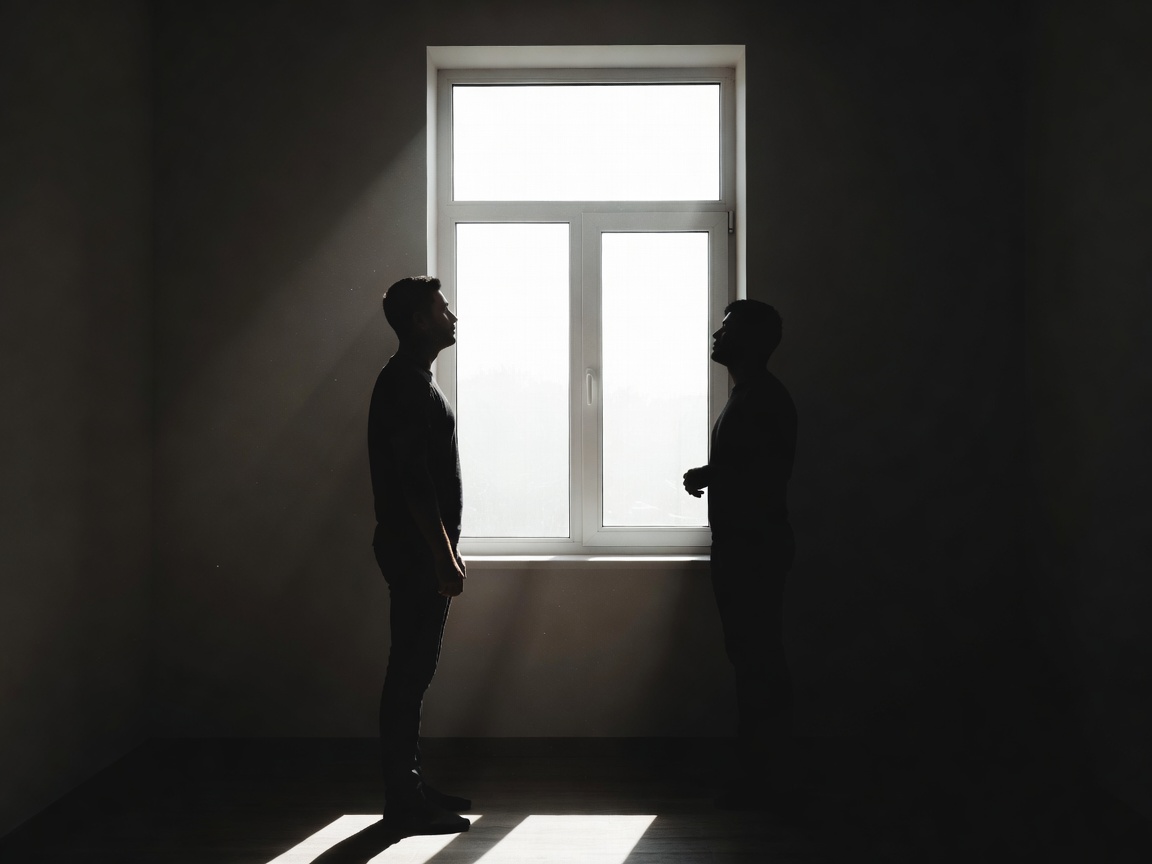
First viewing: register the experience
Watch a short scene without pausing. Write down the emotional change you experienced, not the explanation you think a critic would prefer. Perhaps a meeting began comfortably and ended with unease. Perhaps you felt unexpectedly distant from a character. These responses are starting points, not conclusions about what every viewer must feel.
Also note the information the scene withholds. Do we know who is outside a door? Can we hear a person before seeing them? Does a reaction arrive before its cause? A scene often organizes emotion by controlling access to events. Identifying the missing information helps connect a subjective response to a specific narrative arrangement.
Second viewing: describe before interpreting
Choose a manageable passage and record its major visual changes. Note who occupies each shot, where they are placed, what draws your eye and what changes before the next cut. Avoid trying to document every pixel. A useful log captures relationships: one person faces the doorway; another remains behind them; the next shot removes the doorway from view.
Keep observation and inference in separate columns. “The camera stays outside the room” is an observation. “We are denied intimacy” is an interpretation. The latter may be convincing, but only after you establish what that position allows and prevents. Precise description also makes it easier for someone else to test your argument against the scene.
| Layer | Record | Test |
|---|---|---|
| Space | Distance, edges, entrances, obstructions | What remains unavailable? |
| Time | Holds, cuts, movement, delayed reactions | When does information arrive? |
| Sound | Voices, ambience, music, silence | Does sound support or complicate the image? |
| Reading | An emotional claim and an alternative | Which explains more evidence? |
Third viewing: follow the transitions
A striking frame can distract from the change that made it significant. Compare the image before it and the image after it. Did the cut reduce distance, exchange a shared frame for isolated close-ups or reveal a previously hidden observer? In a conversation, the choice to hold on the listener may matter more than the speaker’s words.
David Bordwell, Kristin Thompson and Jeff Smith’s Film Art: An Introduction provides a useful vocabulary for connecting style and narrative form. Use technical terms to sharpen an account, not to replace one. Naming shot/reverse-shot does not explain why a particular exchange feels unstable; mismatched looking space, delayed responses or changes in shot scale may help do that.
Restore sound and performance
Watching briefly without sound can help isolate visual patterns, but return to the complete scene before drawing conclusions. Music may make a seemingly calm image uneasy. An offscreen sound can give empty space a direction. A pause in a voice can make a cut feel like an interruption rather than a neutral change of view.
Performance also unfolds across time. A single photograph may catch an expression between gestures and misrepresent the surrounding action. Look at the preparation and release of a movement: a hand approaches an object, stops, then withdraws. The hesitation may carry more narrative information than the still frame of the hand itself.
Connect the local detail to the film
Ask whether your proposed pattern appears elsewhere. A doorway that seems threatening in one scene may function differently later. A repeated camera distance may establish a baseline, making one unusual close-up important. Without comparison, it is easy to mistake a normal feature of a film’s style for a unique emotional signal.
For further practice, compare different approaches rather than ranking them as correct or incorrect. The spatial storytelling of Bong Joon Ho’s Parasite, the shifts in access and perspective in Asghar Farhadi’s A Separation, and the intimate framing of Barry Jenkins’s Moonlight invite distinct questions. Each requires attention to its own patterns, not a template imported from another film.
Write one claim, then try to weaken it
Build a short paragraph around a specific change: “The conversation begins in a shared frame, but separate shots appear after the accusation. That separation may reinforce the newly visible distrust.” Add another piece of evidence, such as a changed eyeline or a withheld response. Then ask whether ordinary coverage or practical staging could explain the same choices.
Your conclusion can remain qualified. “May reinforce” is not weak when the claim is interpretive rather than factual. What matters is showing how you reached it and what would make you reconsider. A useful scene reading offers another viewer a way to look again; it does not close the image to further discussion.
Offer your own scene reading